
Association adopts a new name that more clearly represents its members, their work, and its role as the leading voice for commercial real estate development

Association adopts a new name that more clearly represents its members, their work, and its role as the leading voice for commercial real estate development

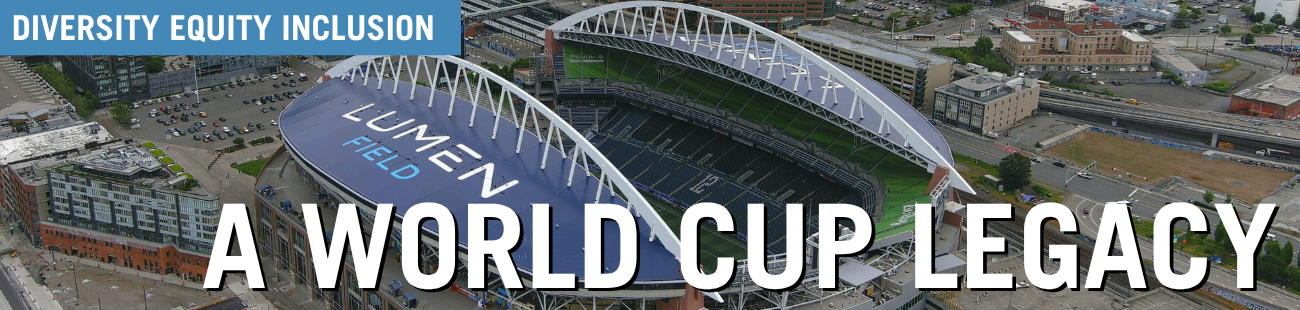
FIFA World Cup 26™ has arrived in Seattle! In April, as our city prepared for the world stage, our DEI Committee hosted their Building for All: A World Cup Legacy event at HITT Contracting. The event gathered industry partners for a hosted happy hour and panel discussion exploring the Seattle FWC26 Planning Committee's efforts through a commercial real estate and DEI lens.

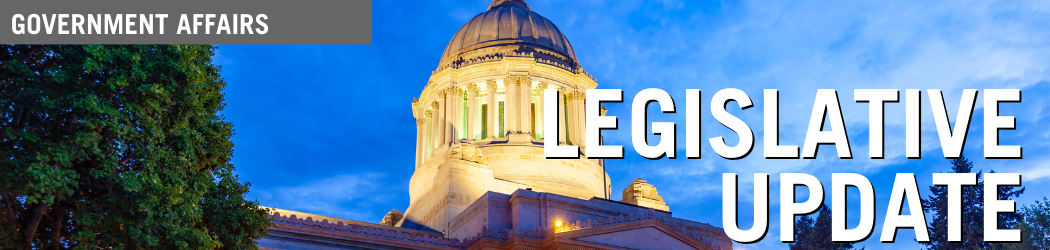
The 2026 legislative session officially adjourned on March 12, wrapping a fast-paced, 60-day sprint that brought major debates on taxes, housing, insurance and long-term budget pressures. It was a meaningful year for our advocacy, and a year of real wins.

Session is officially over- finally! After an intense 60-day sprint, lawmakers wrapped up the second half of the biennium still wrestling with housing shortages, affordability challenges and major tax proposals that shaped much of the debate. The “Millionaires Tax” drove a marathon 24½-hour House floor debate and framed the final budget negotiations, all while the Legislature worked through a projected $10B shortfall and an $80B supplemental operating budget.

Things are moving quickly in Olympia. Monday marked the Opposite House of Origin Fiscal Cutoff, and today is the Opposite House of Origin Policy Cutoff, meaning bills must advance out of policy committees in the opposite chamber to remain alive this session.
Several bills of note have already passed out of their opposite chambers, including:To illustrate how quickly things are moving in Olympia, since this update was originally drafted the Governor announced he will sign the latest striker amendment to SB 6346 introduced by House Finance Chair Rep. April Berg, which was released Friday morning. The updated version of the bill, made public by House Democrats, specifies that a portion of the approximately $4 billion annually the tax is projected to generate would be used to fund free school breakfast and lunch for all K-12 students statewide. The proposal would impose a 9.9% tax on certain individual earnings, impacting an estimated 30,000 taxpayers, with collections beginning in 2028. The tax would not apply to home values or retirement savings. The revised bill also dedicates 5% of the tax proceeds to an account supporting childcare and early learning programs.

This Wednesday marked the Opposite House of Origin Policy Cutoff, meaning bills that did not advance out of policy committee in the opposite chamber are now considered dead for the year unless they are deemed NTIB. Several development-related bills successfully moved forward, including SB 6026 (commercial to residential mixed-use zones), SB 6156 (small elevator reforms), SB 5729 (streamlining affordable housing permitting), HB 2664 (certified mail notice fixes), and HB 2418 (permitting review process).
Supplemental budgets dominated the week’s activity. The Senate released a $79.3 billion two-year operating budget, roughly $1.5 billion larger than last year’s enacted budget, while the House proposal totals approximately $79.2 billion. SB 6346, the proposed millionaire’s tax, was also heard amid controversy over duplicate signatures submitted on both pro and con sides. Although revenue from the tax is not expected until 2029, both budgets assume its passage, and the bill is expected to move out of House Finance early this morning.

One critical aspect of sustainability is to strive for resiliency in the way our cities function. While we endeavor to limit pollution and consume as few natural resources as possible, we must also think about the threats of disasters, both natural and man-made, and design our cities to withstand them.

In the face of mounting climate challenges, the construction industry is evolving—and contractors are stepping up. One standout initiative is the Contractor’s Commitment (CC), a sustainability framework created by contractors, for contractors. Developed through the Sustainable Construction Leaders (SCL) peer network, the CC helps firms advance sustainable practices across five core categories: carbon, water management, waste management, jobsite wellness, and materials.

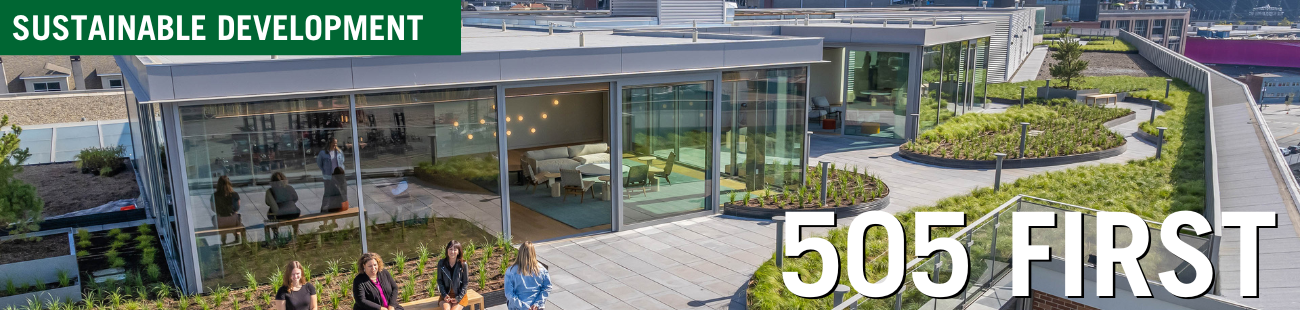
NAIOPWA is excited to invite you to the From Field to Ferry Property Tour on Tuesday, July 15. This tour highlights the city’s exciting preparations for the 2026 FIFA World Cup. As part of this networking event spotlighting urban transformation, attendees will visit 505 First, a key sustainable project helping revitalize Pioneer Square. This building illustrates how thoughtful renovation and green design can modernize existing infrastructure, enhance community spaces, and support a more resilient urban core.

I’d like to celebrate Earth Day this year remembering our forests. In the Pacific Northwest, our vast forests have been a part of the ecosystem since the Holocene began. It wasn’t until settlers moved west that the landscape changed, and the ecosystem had to deal with significant human pressure. Below is a great recap of the history of mass logging and it’s inevitable wind down from The Good Rain by Timothy Egan:

NAIOP Washington State is excited to partner with Alaska Airlines for the 2025 Pacific Northwest Real Estate Challenge, NAIOPWA’s annual development case competition in which Master of Real Estate (MSRE) students take on the role of developer to craft creative and innovative development proposals for a selected project site. At the end of the quarter, student teams will present their proposals to a panel of industry judges who name the Challenge winner and recipient of the coveted Bob Filley Cup.

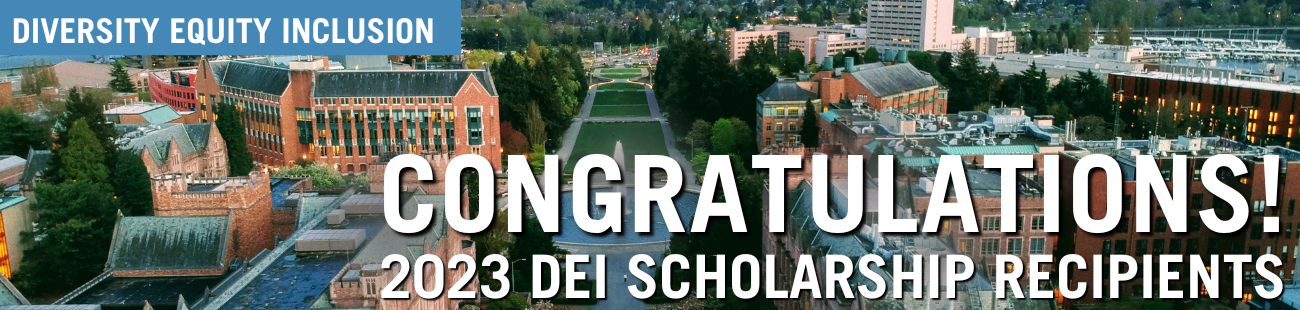
NAIOP Washington State has partnered with University of Washington (UW) to create the NAIOPWA Diversity, Equity, & Inclusion (DEI) Scholarship to support women and underrepresented minorities seeking ways to strengthen their place in the CRE industry. This scholarship provides financial aid to students enrolled in UW's Commercial Real Estate Certification Program, an eight-month course that prepares students for a career in CRE by providing insight into best practices and trends and helping them build industry connections.

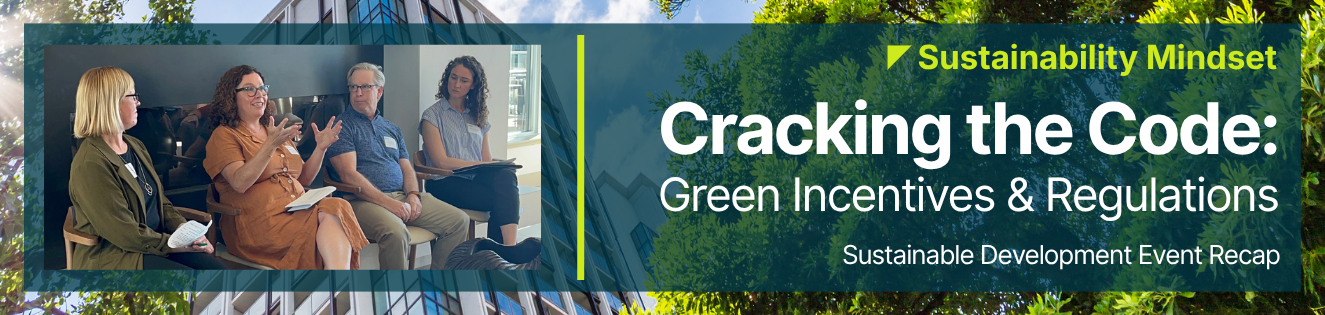
During the NAIOPWA event, “Navigating the Carbon Offset Market” attendees met in a cozy lounge space at MG2 to network and listen to four diverse local industry experts talk about a timely topic: carbon offsets.

Across the AEC Industry, many are focusing on how to reduce the embodied carbon in our projects. With concrete and steel being the biggest culprits in ground-up projects, it’s only fitting that they get the most press. In this piece we’re focusing on the cement component of concrete.

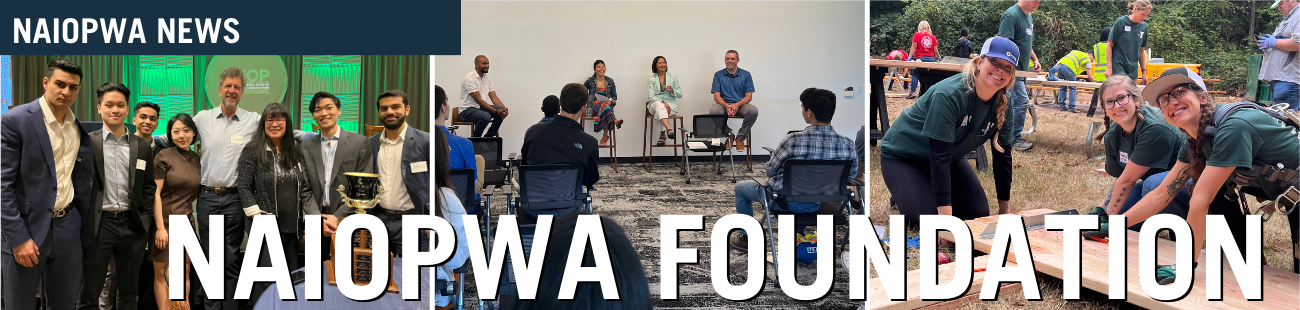
Through the NAIOP Washington State Foundation, NAIOPWA is able to apply the skills and resources of our membership to initiatives that give back to our community, engage students and foster their careers, and help create a more diverse, equitable, and inclusive commercial real estate industry. These initiatives are possible because of the generous support of our Foundation Committee Sponsors. Click on any committee name below to learn more about these sponsorship opportunities:

Major Week for Priority Bills: Housing Affordability, REET, Energy Efficiency, Rent Control.
SEATTLE – Presented on Friday night at the NAIOPWA 2023 Night of the Stars Gala, the awards honored an impressive slate of commercial real estate projects that serve the community with innovations in retail, office, industrial and multi-family development.
The projects, and the developers who engaged them, demonstrate the flexibility and ingenuity of the CRE community. Additionally, NAIOPWA’s 2023 Night of the Stars finalists highlight important strides made in sustainable development, unique historical renovation, and a continued commitment to world-class development in the Greater Puget Sound area.
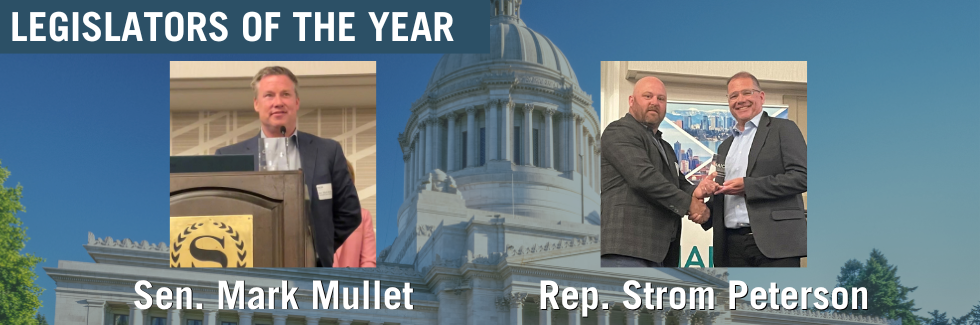
NAIOP Washington State is proud to announce the recipients of its 2023 Legislator of the Year Awards: Senator Mark Mullet and Representative Strom Peterson.
Senator Mullet, a Democrat representing the 5th Legislative District, showed a commendable commitment to understanding the concerns of the commercial real estate industry during this year's legislative session. His leadership on bills to streamline and expedite the land use review and permitting process has better positioned our industry to address our pressing housing crisis and will enable greater investment in Washington. Senator Mullet also sponsored legislation that, if passed, would have greatly expanded allowable density near high-capacity public transit and would have required deeper study of anticipated costs associated with the state energy performance standards prior to code implementation.

NAIOP Washington State’s Sustainable Development Committee elected to undertake a hot topic for 2023: Adaptive Reuse. The buzz is everywhere, so how do we synthesize that broad topic into bite size chunks? On April 6, 78 attendees took on that task with great energy.